Views: 29 Author: Site Editor Publish Time: 2024-08-07 Origin: Site
In the realm of architecture and engineering, the Anchorage Frame stands as a cornerstone of structural safety and stability. More than just a technical term, it embodies the ingenuity and innovative spirit of engineers, ensuring that from skyscrapers to bridges and even intricate home decor, every structure is firmly rooted to the ground, resilient against the elements and the test of time.
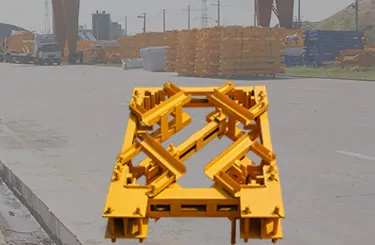
The Anchorage Frame, literally translated, refers to a system of interconnected components and support structures that securely anchor critical parts of a building or structure to its foundation or base. This system effectively distributes and withstands loads from the superstructure, including gravity, wind forces, seismic activity, and more, safeguarding the integrity and safety of the entire structure.
The Significance of Anchorage Frame in Architectural Design
In high-rise buildings, the Anchorage Frame acts as a bridge connecting the core tube with the peripheral frame. Through intricate mechanical analysis and calculations, it ensures that the building remains balanced in both vertical and horizontal directions. It serves as the "invisible skeleton" of the building, unseen yet supporting the stability and safety of the entire structure.
For bridge engineering, the application of the Anchorage Frame is even more crucial. It not only secures the massive bridge deck firmly to the shores but also withstands the impact of vehicle traffic, temperature fluctuations, and natural disasters. With precise design and high-quality construction, the anchorage frame guarantees the safety and durability of bridges spanning rivers, lakes, and seas.
Technological Innovations and Challenges
As building technology advances, the design and construction of Anchorage Frames are also evolving. The adoption of new materials, such as high-performance steel and carbon fiber composites, enables anchorage frames to maintain high strength while reducing weight and enhancing construction efficiency. Furthermore, the introduction of digital and intelligent technologies, like BIM (Building Information Modeling) and remote monitoring systems, makes the design of anchorage frames more precise and the construction process safer and more controllable.
However, facing increasingly complex engineering environments and ever-rising safety standards, the design and construction of Anchorage Frames also present numerous challenges. How to ensure the stability and durability of anchorage frames under extreme weather and geological conditions? How to optimize material usage and rationalize cost control while ensuring safety? These are issues that engineers must continually explore and address.


