Views: 15 Author: Site Editor Publish Time: 2024-08-23 Origin: Site
In the modern construction industry, tower cranes are indispensable lifting equipment, and their stability and reliability are directly related to the safety and efficiency of construction projects. Among the many accessories of tower cranes, the gear ring serves as a critical transmission component.
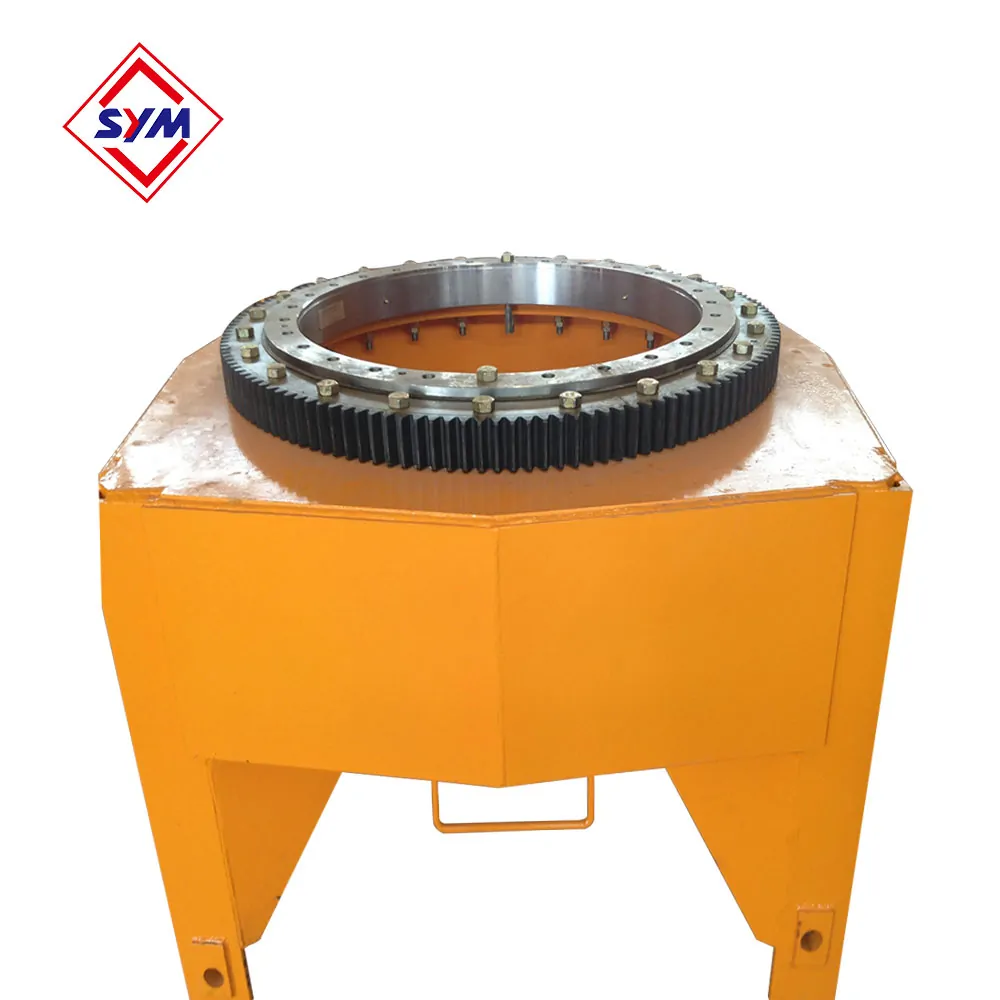
The gear ring, also known as a ring gear, is a core component within the tower crane's slewing mechanism. It is typically fixed on the slewing bearing, functioning as a stationary gear that meshes with the motor output gear to drive the upper structure of the tower crane to rotate. The gear ring's structure is meticulously designed and made from high-strength materials to ensure stable transmission performance and longevity even under heavy loads and frequent starts and stops.
The primary functions of the gear ring include:
Transmission: It converts the rotational motion of the motor into the slewing motion of the tower crane's upper structure through meshing with the motor output gear.
Load-bearing: It supports the weight of the upper structure and its suspended loads, ensuring stability during slewing.
Reducing Friction and Wear: By adopting suitable tooth profiles and surface treatments, it minimizes friction and wear between gears, enhancing transmission efficiency and service life.
The gear ring is typically made from high-strength, wear-resistant materials such as 45 steel or 40Cr steel. These materials offer excellent mechanical and processing properties, meeting the tower crane's demands for strength and wear resistance.
The manufacturing processes for the gear ring generally involve the following steps:
Rough Forging: An initial shape is forged to improve material density and mechanical properties.
Quenching and Tempering: The rough forging undergoes quenching and tempering to optimize its internal structure and mechanical properties, enhancing strength and toughness.
Lathe Machining: The quenched and tempered material is lathed to achieve the desired dimensions and precision.
Gear Hobbing: The tooth profile is cut using a gear hobbing machine to form precise teeth and tooth pitches.
Drilling and Secondary Hardening: Necessary mounting holes are drilled, and secondary hardening treatments may be applied to improve hardness and wear resistance.
Tempering at High Temperature: High-temperature tempering eliminates quenching stresses, improving dimensional stability and toughness.
Flaw Detection and Inspection: Completed gear rings undergo flaw detection and inspection to ensure they are free from internal defects and meet surface quality standards.
Rust Prevention and Packaging: Qualified gear rings are rust-proofed and packaged for transportation and storage.
As a key component of the tower crane's slewing mechanism, the performance of the gear ring directly affects the overall operation of the crane. Specifically:
Ensures Smooth Slewing Motion: The precise meshing between the gear ring and motor output gear ensures smooth and accurate slewing of the upper structure.
Improves Transmission Efficiency: The optimized tooth profile and manufacturing processes minimize friction and wear, enhancing transmission efficiency and reducing energy consumption.
Extends Service Life: High-strength, wear-resistant materials and superior manufacturing techniques ensure a long service life even under harsh conditions.
Safeguards Construction Safety: The stable operation of the gear ring is vital for the safe construction using tower cranes. Malfunctions can compromise the crane's performance and endanger safety.
Regular maintenance and servicing are crucial to extending the service life of the gear ring and ensuring its stable operation. This includes:
Regular Inspections: Regularly inspect the gear ring for cracks, wear, and other defects, taking corrective actions promptly.
Lubrication: Regularly lubricate the gear ring to reduce friction and wear, enhancing transmission efficiency.
Replacement of Worn Parts: Timely replace severely worn gear rings to avoid impacting the crane's performance and safety.


